Custom CRM Development Guide for Business Growth in the USA
- bhartiig6
- Mar 31
- 9 min read
Updated: Apr 1
In today’s highly competitive B2B landscape, businesses across the USA are constantly looking for smarter ways to manage customers, streamline operations, and improve revenue generation. Customer Relationship Management (CRM) systems have become the backbone of modern enterprises, enabling organizations to centralize data, automate workflows, and enhance customer engagement.
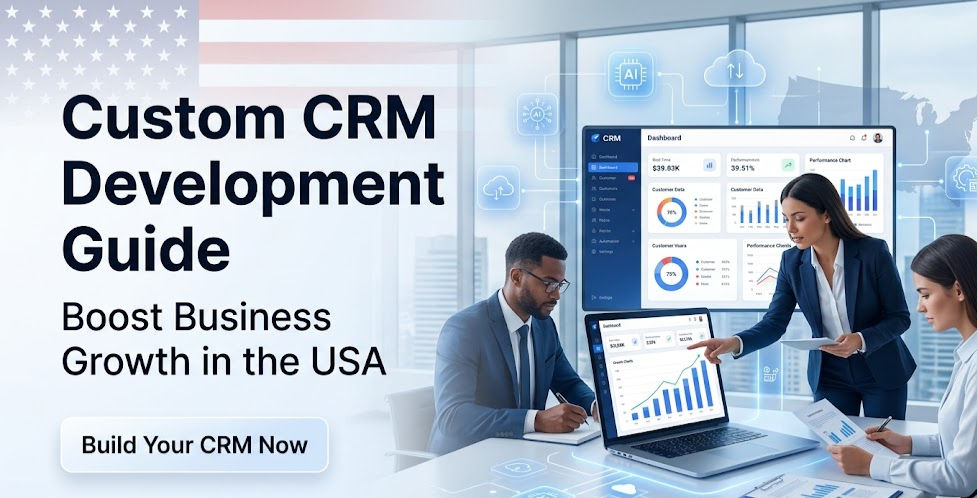
However, off-the-shelf CRM tools often fall short when it comes to addressing unique business needs. This is where crm development and custom solutions come into play. A tailored CRM built by a professional custom crm software development company allows businesses to align technology with their exact processes, industry requirements, and scalability goals.
According to industry trends, companies that implement customized CRM solutions experience improved sales efficiency, better customer retention, and more actionable insights through analytics. In this guide, we will explore everything you need to know about custom CRM development—from its definition and types to development processes, benefits, costs, and future trends—specifically tailored for businesses aiming for growth in the USA market.
What is Custom CRM Development?
Custom CRM development refers to the process of designing and building a CRM system tailored specifically to a business’s workflows, goals, and operational structure. Unlike pre-built CRM platforms that offer standardized features, a custom CRM is built from the ground up or heavily customized to suit a company’s unique needs.
A crm development company typically works closely with stakeholders to analyze business requirements, design user-centric interfaces, and integrate necessary functionalities such as lead tracking, automation, reporting, and third-party integrations. This approach ensures that the CRM aligns perfectly with internal processes rather than forcing teams to adapt to rigid software limitations.
Custom CRM development is especially valuable for enterprises with complex operations, multiple departments, or industry-specific requirements. It allows businesses to maintain full control over data, scalability, and features, making it a long-term investment rather than a recurring subscription expense.
Why Businesses Need Custom CRM Solutions
Limitations of Off-the-Shelf CRM Platforms
Off-the-shelf CRM systems are designed to cater to a broad audience, which often results in limited flexibility. While they provide general features like contact management and sales tracking, they may not support niche workflows or industry-specific requirements. Businesses often face challenges such as restricted customization options, unnecessary features, and limitations in scalability.
These constraints can lead to inefficiencies, forcing teams to rely on workarounds or additional tools. Over time, this fragmented approach can hinder productivity and increase operational complexity.
Industry-Specific Workflow Requirements
Every business operates differently depending on its industry, target audience, and internal processes. For example, a SaaS company may require subscription tracking, while a real estate firm needs property management features. A custom CRM ensures that these unique workflows are embedded directly into the system.
By leveraging crm development, companies can design modules tailored to their operations, reducing manual effort and improving accuracy. This customization helps teams work more efficiently and ensures that the CRM supports, rather than restricts, business processes.
Scalability for Growing Enterprises
As businesses expand, their CRM requirements evolve. Off-the-shelf solutions may struggle to keep up with increasing data volumes, users, and integrations. Custom CRM systems are built with scalability in mind, allowing organizations to add new features, users, and modules as needed.
A well-designed system developed by a custom crm software development company ensures that the CRM grows alongside the business without requiring a complete overhaul. This makes it a sustainable solution for long-term growth.
Data Control and Security Advantages
Data security is a critical concern for modern enterprises, especially those handling sensitive customer information. Custom CRM systems provide businesses with full ownership and control over their data. Unlike third-party platforms, where data is stored on external servers, custom solutions can be hosted on secure infrastructure of the company’s choice.
This enables organizations to implement advanced security protocols, comply with regulations, and minimize risks associated with data breaches. It also ensures better governance and privacy compliance.
Key Features of a Custom CRM System
A well-built custom CRM system includes a variety of features designed to streamline operations and improve customer relationships.
These features can be tailored based on business needs, but typically include:
Contact and lead management systems
Sales pipeline tracking and forecasting
Workflow automation tools
Advanced reporting and analytics dashboards
AI-powered insights and recommendations
Integration with third-party tools and APIs
Mobile accessibility for remote teams
Role-based access control for security
These features collectively help businesses centralize their operations and gain better visibility into customer interactions, sales performance, and overall business heal.
Types of CRM Systems
Operational CRM
Operational CRM focuses on automating and improving customer-facing processes such as sales, marketing, and customer service. It helps businesses manage leads, track interactions, and streamline workflows. This type of CRM is widely used by sales-driven organizations looking to enhance efficiency and customer engagement.
Analytical CRM
Analytical CRM systems are designed to analyze customer data and generate actionable insights. They help businesses understand customer behavior, identify trends, and make data-driven decisions. With advanced reporting and analytics capabilities, companies can optimize marketing strategies and improve customer retention.
Collaborative CRM
Collaborative CRM focuses on improving communication and coordination between different departments within an organization. It ensures that customer data is accessible across teams such as sales, marketing, and support, enabling a unified approach to customer management.
Strategic CRM
Strategic CRM is centered around long-term customer relationship building. It helps businesses align their operations with customer needs and market trends. This type of CRM is commonly used by enterprises that prioritize customer-centric strategies for sustainable growth.
Custom CRM Development Process
Requirement Analysis
The first step in CRM development involves understanding business goals, workflows, and challenges. Stakeholders collaborate with the development team to define requirements, identify pain points, and outline desired features. This phase ensures that the final product aligns with business objectives.

Planning & Strategy
Once requirements are gathered, the development team creates a strategic plan that includes feature prioritization, technology selection, and project timelines. This stage ensures that the project is executed efficiently with clear milestones and deliverables.
UI/UX Design
User experience plays a critical role in CRM adoption. Designers create intuitive interfaces that are easy to navigate and visually appealing. The goal is to ensure that users can perform tasks efficiently without a steep learning curve.
Development Phase
During development, frontend and backend components are built, APIs are integrated, and databases are structured. A reliable crm development company ensures that the system is robust, scalable, and secure while meeting all functional requirements.
Testing & Quality Assurance
Before deployment, the CRM undergoes rigorous testing to identify and fix bugs. This includes functional testing, performance testing, and security testing. QA ensures that the system performs optimally under different conditions.
Deployment & Launch
Once testing is complete, the CRM is deployed on cloud or on-premise infrastructure. Data migration is performed if needed, and the system is made available to users.
Maintenance & Support
Post-launch, ongoing maintenance is essential to keep the CRM updated and secure. Regular updates, bug fixes, and feature enhancements ensure long-term performance and usability.
Benefits of Custom CRM Development
Custom CRM development offers powerful advantages that go far beyond what generic, off-the-shelf solutions can provide. By building a CRM system tailored to your business, you gain better control, efficiency, and long-term value.
Let’s break down the key benefits:
1. Tailored to Specific Business Processes
One of the biggest advantages of custom CRM development is that it is designed specifically for your business workflows. Unlike pre-built CRMs that require you to adjust your processes, a custom CRM adapts to how your team already operates.
This means you can include features, dashboards, and automation that match your exact requirements—whether it’s for sales pipelines, customer support, or internal operations. As a result, your team spends less time adapting and more time being productive.
2. Improved Operational Efficiency
Custom CRM systems streamline everyday business operations by automating repetitive tasks such as data entry, follow-ups, and reporting. This reduces manual effort and minimizes the chances of human error.
With better workflows and automation in place, employees can focus on high-value tasks like strategy and customer engagement, ultimately improving overall productivity.
3. Enhanced Customer Experience
A custom CRM allows you to store and analyze detailed customer data, including preferences, behavior, and interaction history. This helps businesses deliver more personalized and timely communication.
When customers feel understood and valued, it leads to stronger relationships, higher satisfaction, and increased loyalty—key factors for long-term growth.
4. Better Sales Tracking and Lead Management
With a custom-built CRM, you can design a sales pipeline that perfectly reflects your business model. This allows for accurate tracking of leads, opportunities, and conversions at every stage.
Sales teams gain real-time insights into performance, enabling them to identify bottlenecks, prioritize high-value leads, and close deals more efficiently.
5. Centralized Data Storage
A custom CRM acts as a single source of truth for all customer and business data. Instead of scattered information across spreadsheets, emails, and different tools, everything is stored in one secure system.
This improves collaboration across teams, ensures data consistency, and makes it easier to access important information whenever needed.
6. Increased ROI Over Time
Although custom CRM development may require a higher initial investment, it delivers significant returns in the long run. By improving efficiency, reducing operational costs, and increasing sales conversions, businesses can achieve a higher return on investment.
Additionally, you avoid recurring subscription fees and unnecessary features that come with many off-the-shelf CRM solutions.
7. Greater Flexibility and Scalability
As your business grows, your CRM needs will evolve. A custom CRM system is built with scalability in mind, allowing you to add new features, integrations, and users without limitations.
This flexibility ensures that your CRM continues to support your business at every stage of growth, rather than holding it back.
Custom CRM vs Off-the-Shelf CRM
Feature | Custom CRM | Off-the-Shelf CRM |
Customization | Fully customizable | Limited customization |
Scalability | Highly scalable | Limited scalability |
Cost | Higher initial investment | Subscription-based |
Ownership | Full control | Vendor-dependent |
Flexibility | High | Moderate |
Custom CRM solutions are ideal for businesses seeking long-term growth and flexibility, while off-the-shelf solutions may suit smaller organizations with basic needs.
Choosing the Right CRM Development Company
Selecting the right partner is crucial for successful CRM implementation. Businesses should consider:
Experience in crm development
Portfolio of previous projects
Technical expertise and technology stack
Client reviews and testimonials
Post-development support services
Communication and project management approach
A professional custom crm software development company will not only build the system but also guide businesses through strategy, implementation, and optimization.
CRM Development Trends in the USA Market
The CRM landscape is evolving rapidly, driven by technological advancements:
AI-powered automation and predictive analytics
Cloud-based CRM adoption
Integration with marketing automation tools
Mobile-first CRM solutions
Hyper-personalization of customer interactions
Businesses in the USA are increasingly adopting these trends to stay competitive and deliver superior customer experiences.
Cost of Custom CRM Development
The cost of developing a custom CRM varies depending on several factors:
Feature complexity
Number of integrations
Development team location
Technology stack used
UI/UX requirements
For small to medium businesses, costs may range from moderate to high, while enterprise-level CRM systems require larger investments. However, the long-term ROI often outweighs the initial cost due to increased efficiency and revenue generation.
Challenges in CRM Development
While custom CRM development offers many benefits, it also comes with challenges:
Data migration from legacy systems
User adoption and training
Integration with existing tools
Maintaining security and compliance
Managing development timelines
Working with an experienced development partner can help mitigate these challenges effectively.
Use Cases of Custom CRM Across Industries
Custom CRM systems are widely used across various industries:

IT & SaaS: Managing subscriptions and client relationships
Healthcare: Patient management and scheduling
Real Estate: Property and client tracking
E-commerce: Order management and customer insights
Financial Services: Client portfolios and transaction tracking
Each industry benefits from tailored features that address specific operational needs.
Why Consider a CRM Development Company in Dubai
Many businesses in the USA also collaborate with global providers, including a crm development company in dubai, due to several advantages:
Competitive pricing models
Access to skilled development talent
Experience with international clients
Scalability and flexible engagement models
High-quality development standards
Outsourcing to such companies can be a strategic decision for businesses looking to balance cost and quality while accessing global expertise.
Moreover, outsourcing reduces the burden of hiring and managing an in-house development team. This allows IT companies to focus on their core business activities while experts handle the technical aspects of crm development.
In conclusion, partnering with a custom crm software development company in Dubai offers a powerful combination of affordability, expertise, and innovation. It enables businesses to build high-quality CRM solutions while staying agile, competitive, and ready for future growth.
Future of CRM Development
The future of CRM is being shaped by emerging technologies:
AI-driven predictive analytics
Voice-enabled CRM interfaces
Automation-first platforms
Integration with IoT and advanced data systems
No-code/low-code CRM development
As businesses continue to prioritize customer-centric strategies, CRM systems will become more intelligent, automated, and deeply integrated into business ecosystems.
Conclusion
Custom CRM development has become a critical investment for businesses aiming to scale and stay competitive in the modern marketplace. Unlike generic solutions, a tailored CRM aligns with specific business processes, enhances operational efficiency, and provides valuable insights for decision-making.
By partnering with a reliable crm development company or a specialized custom crm software development company, businesses can build scalable, secure, and future-ready systems that support long-term growth. Whether you are a startup or an enterprise in the USA, investing in custom CRM development ensures that your organization is equipped with the right tools to manage customers, optimize workflows, and drive sustainable success.

Comments